How to Buy Land Remotely: A Step-by-Step Guide for International Investors
 Natalia Ribeiro
Key Takeaways
- International investors can complete an entire U.S. land purchase remotely — from research through closing — using county GIS portals, digital e-signature platforms, SWIFT wire transfers, and licensed U.S. title companies that specialize in international closings.
- Title insurance ($300–$800 for parcels under $50,000) is non-negotiable for remote purchases — it's your only protection against title defects, undisclosed liens, or ownership errors discovered after you've already wired funds.
- Seller financing dramatically reduces remote purchase risk: instead of a single large international wire, you make a $1,500–$5,000 down payment and pay monthly — allowing time to verify everything before full commitment.
- SWIFT international wire transfers to U.S. title company escrow accounts are routine and safe — but always confirm wiring instructions by phone directly with the title company, never by email alone (wire fraud is the #1 real estate scam).
- After closing, vacant land management is nearly passive: county property taxes are $50–$300/year (payable online), maintenance is minimal, and county GIS portals let you monitor your ownership record from any country in the world.
You Don't Need to Be There to Buy There
One of the most common questions we hear from Brazilian and Latin American investors is: "Do I need to travel to the United States to buy land?" The answer is no — and the process of buying U.S. land remotely is more straightforward than most people expect.
At LOTSS$, a significant portion of our investors complete their entire purchase from Brazil — researching, negotiating, signing, and wiring funds without ever boarding a plane. The U.S. real estate system is designed to accommodate remote transactions. Federal law, digital notarization tools, and international wire transfer infrastructure make it fully possible to own land thousands of miles away with confidence.
This guide walks through every step of a remote land purchase — from initial research to receiving your deed.
Step 1: Define Your Investment Goals
Before looking at any specific property, be clear about what you want the investment to do:
- Capital appreciation: You buy, hold 3–7 years, and sell at a higher price. Best suited for markets with clear growth drivers.
- Passive income: You lease the land to a farmer, RV park, billboard company, or solar developer. Income-generating land requires more upfront work to structure.
- Future development: You buy land anticipating a future development project — either your own or sold to a developer later.
- Portfolio diversification: You want dollar-denominated assets outside the Brazilian real. Land in stable U.S. markets serves this goal well.
Your goal determines which type of land (rural/agricultural, suburban lots, commercial-zoned parcels) and which market to target. At LOTSS$, our lots are primarily suited for capital appreciation and future development — positioned in a growing Gulf Coast market.
Step 2: Choose Your Market Remotely
You can learn a tremendous amount about a U.S. land market without visiting it. Here's what to research remotely:
- Population trends: Use U.S. Census data (census.gov) to see whether the county is growing or shrinking. Growing counties = growing land demand.
- Economic drivers: What industries exist in the area? Are major employers expanding or contracting? Look at Bureau of Labor Statistics data for county-level employment.
- Infrastructure plans: Search "[County name] comprehensive plan" or "[County name] capital improvement plan" to find government documents outlining planned roads, utilities, and development projects.
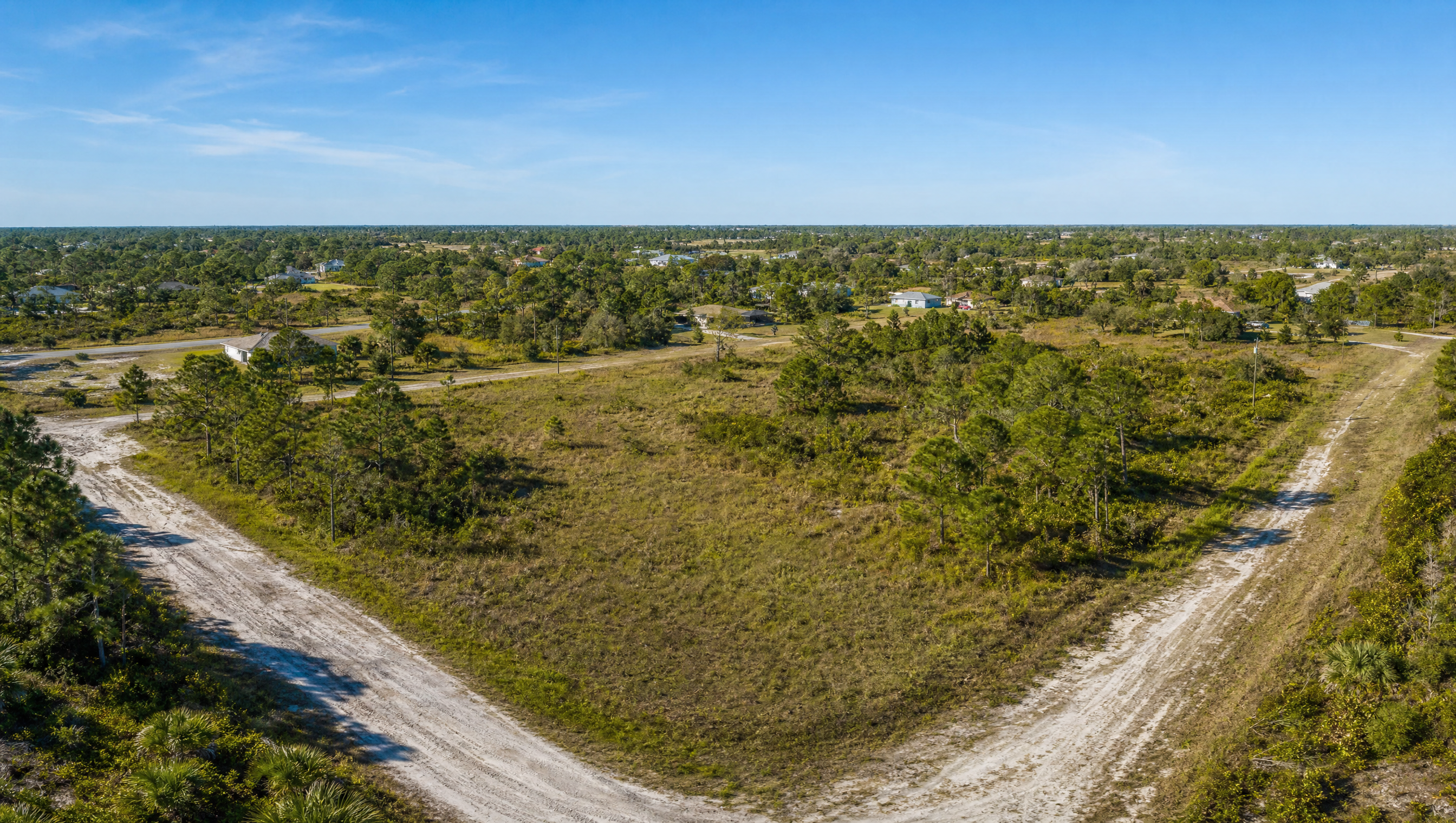
- Satellite imagery: Google Earth and Google Maps let you examine the land, nearby development patterns, road access, and surrounding land use — for free, from anywhere in the world.
- Local news: Search "[County name] real estate" and "[County name] development" in Google News to see what's being built and discussed locally.
Step 3: Find and Evaluate Properties Remotely
Several platforms list U.S. land for sale with enough information to begin remote evaluation:
- LOTSS$ (lotsss.com): Our listings include parcel maps, flood zone status, zoning classification, and seller financing terms — specifically designed for remote investors.
- LandWatch, Land.com, Lands of America: National land listing aggregators with map-based search.
- Zillow and Realtor.com: Include vacant land listings, often with MLS data and historical price trends.
- County property appraiser websites: Search "[County name] property appraiser" for a GIS map where you can look up any parcel by address or parcel number and see its assessed value, size, and legal description — all public record.
For each property that interests you, request the following from the seller:
- Legal description and parcel ID number
- Survey (if available)
- Title report or title commitment from a licensed title company
- Flood zone determination
- Zoning classification and permitted uses
- Utility availability information
- Current property tax bill
Step 4: Secure Title and Legal Protection
This is the most critical step. Never wire money for a land purchase without title insurance from a licensed U.S. title company. Title insurance protects you if a defect in the title is discovered after closing — a previous lien, an heir who wasn't notified, a surveying error.
The title process works remotely as follows:
- The seller orders a title commitment from a title company (or you specify which title company you want to use — you have that right).
- The title company searches county records and issues a title commitment — a document promising to insure the title once certain conditions are met (usually paying off any existing liens).
- You review the title commitment, ideally with a U.S. real estate attorney.
- At closing, the title company collects funds, records the deed with the county, and issues your title insurance policy.
Total cost of title insurance for a $10,000–$50,000 land parcel: typically $300–$800 as a one-time premium.
Step 5: Decide on Your Ownership Structure
As discussed in our article on U.S. tax advantages, you can buy land in your personal name or through a U.S. LLC. For most first-time buyers of smaller parcels, buying in your personal name is simpler and still fully legal and protected.
If you decide to use an LLC, you can form one entirely remotely:
- File online with the state's Secretary of State (Florida, Mississippi, Wyoming, and Delaware are popular choices for foreign-owned LLCs)
- Obtain an EIN (Employer Identification Number) from the IRS — required for the LLC to have a bank account and file taxes. You can apply online using IRS Form SS-4, or hire a service to do this for $50–$150.
- Open a U.S. bank account for the LLC — some banks (Mercury, Relay) allow this remotely for foreign-owned entities
Step 6: Negotiate and Sign Remotely
U.S. purchase agreements can be signed digitally. DocuSign, HelloSign, and other e-signature platforms are legally valid for real estate contracts in all 50 U.S. states. You do not need to physically sign anything with wet ink for a land purchase contract.
Key negotiation points for remote buyers:
- Due diligence period: Negotiate a 10–30 day inspection/due diligence period during which you can back out without penalty if you discover problems.
- Seller financing: Many land sellers — including LOTSS$ — offer owner financing, allowing you to pay over time rather than requiring a single large wire transfer. This reduces transfer risk and doesn't require a U.S. bank account for initial payment.
- Closing timeline: Allow 30–45 days for title work and closing coordination, especially for international transactions.
Step 7: Wire Funds Internationally
International wire transfers to U.S. title companies are well-established and routinely processed. Here's what to know:
- SWIFT transfers: Your Brazilian bank can send a SWIFT wire to the U.S. title company's escrow account. Confirm all wiring details directly with the title company — never trust wiring instructions sent by email without verbal confirmation (wire fraud is a real risk).
- Currency exchange: You'll convert BRL to USD through your bank or a foreign exchange service. Compare rates — banks often charge 1–3% over mid-market rate. Services like Wise (TransferWise) offer more competitive rates for BRL-to-USD transfers.
- Brazilian exchange regulations: Transfers above $10,000 (or equivalent) require documentation of the purpose (real estate purchase). Your bank will ask for a copy of the purchase agreement. This is standard — not a problem.
- Transfer timeline: International SWIFT wires typically settle in 1–3 business days. Initiate the transfer with plenty of time before the closing date.
Step 8: Close Remotely
U.S. land closings can happen entirely by mail or electronically. The process:
- The title company sends you closing documents for review and signature (digital signature is typically accepted).
- You wire the purchase funds to the title company's escrow account.
- The title company records the deed with the county, pays the seller, and sends you a copy of the recorded deed and your title insurance policy.
- You receive your deed — typically as a PDF initially, with a hard copy mailed within a few weeks.
You are now the owner of record. The county assessor's records will be updated within 30–60 days to reflect your name (or your LLC's name) as the new owner.
Step 9: After Closing — Managing Your Land Remotely
Once you own the land, ongoing management is minimal for vacant lots:
- Property taxes: The county will mail your annual tax bill. For small lots, taxes are typically $50–$300/year. Many counties offer online payment — you can pay from Brazil via credit card or ACH.
- Maintenance: Vacant land requires minimal maintenance. Some counties require periodic brush clearing — you can hire a local property management company for $100–$300/year.
- Monitoring: County GIS portals let you verify your ownership record is correct. Title insurance protects you if any issue arises with the recorded title.
Frequently Asked Questions
Can I buy US land without visiting the property in person?
Yes — the entire purchase process can be completed remotely. U.S. purchase contracts are legally valid with digital e-signatures. County GIS portals, FEMA flood maps, and Google Earth satellite imagery let you evaluate the property online. Title insurance is ordered digitally, funds are transferred via SWIFT international wire, and the deed is recorded electronically and mailed to you. LOTSS$ has completed dozens of transactions with Brazilian investors who never set foot in Mississippi or Florida.
How do I wire money from Brazil to a US title company safely?
Your Brazilian bank can send a SWIFT wire to the title company's escrow account. Always confirm wiring instructions by phone with the title company directly — never trust instructions sent only via email, as wire fraud targeting real estate closings is a documented scam. Get the title company's bank routing number, account number, and beneficiary name confirmed verbally. Keep all documentation of the transfer. Transfers over $10,000 require a purpose declaration — a copy of the purchase contract suffices.
Do I need a US Social Security number or bank account to buy land in America?
No. Foreign nationals can purchase U.S. land without a Social Security number or U.S. bank account. You can wire purchase funds directly from Brazil to the title company's escrow account. If you form a U.S. LLC, you'll need an EIN (Employer Identification Number) from the IRS, which can be obtained remotely using Form SS-4 without a Social Security number. Some banks like Mercury or Relay allow foreign-owned LLCs to open accounts remotely.
How long does a remote land purchase take from start to finish?
A typical remote land purchase takes 30–60 days from signed contract to recorded deed. Title search and commitment take 7–14 days. International wire transfer settles in 1–3 business days. Recording the deed with the county takes 1–5 business days. The longest variable is the title process — working with a seller like LOTSS$ who already has title commitments ready significantly shortens the timeline for motivated buyers.
What happens to my US land if I die or become incapacitated as a foreign owner?
U.S. real property owned by a foreign individual passes through your estate under U.S. probate law for the state where the property is located. This can be complex and costly for heirs. Owning through a U.S. LLC is often recommended specifically to simplify this: LLC membership interests are personal property (not real property) and can transfer more simply through your estate plan. Consult a U.S. estate attorney when your portfolio grows to meaningful size.
How LOTSS$ Makes Remote Buying Easy
We designed our entire buying experience around the international investor who cannot travel to the U.S. to visit land in person. That means:
- Every lot comes with a full information package: title commitment, flood zone map, zoning letter, parcel map, and satellite imagery
- Seller financing with low down payments — start with $1,500 and pay the balance monthly
- Our team speaks Portuguese and is available to guide you through every step
- We coordinate directly with U.S. title companies experienced in international closings
You can own U.S. land — safely, legally, and without leaving your city — before the end of this month. Browse available lots and get started at lotsss.com.
About Natalia Ribeiro
Managing Partner at LOTSS$, transforming accessible land into great investment opportunities in the USA. Real estate specialist focused on connecting Brazilian investors with high-potential US land investments.
Mississippi Tax Deed Auction Guide: Everything You Need to Know Before You Bid
US Tax Advantages of Owning Land: What Brazilian Investors Need to Know
Related Articles
Passive Income Real Estate Showdown: Vacant Land vs. Traditional Investments
Compare vacant land to stocks, bonds, and rental properties. Discover why passive income real estate through U.S. vacant lots may fit your portfolio better.
How to Read a Florida Tax Deed Auction List Like an Investor
Learn how to decode a Florida tax deed auction list, spot hidden risks, and identify lots worth bidding on before the sale starts.
How to Invest in Florida Tax Deed Auctions From Anywhere (Without Visiting the Courthouse)
Learn how out-of-state and international investors can research, register, and bid in Florida tax deed auctions online without ever stepping into a courthouse.